
Update Regarding CoVid-19 Situation

Update Regarding CoVid-19 Situation

As of March 19, 2020. There is NO CONFIRMED CASE of COVID-19 from our municipality. The identification of PUI (person Under Investigation) and PUM (Person Under Monitoring) is based on the DOH algorithm for Triage of Patients with possible CoVid-19 infection in health care facilities with history of travel from country/area reporting local transmission of CoVid-19. Or Close Contact with a confirmed case of CoVid19. All of our PUMs are currently monitored and are advise to be on home-quarantine. Most of them are stable with no symptoms. Everyday the CoVid-algorithm changes based on local datas and surge in number of cases. We are now on active surveillance and reporting of cases with Influenza like Illnesses (ILI)and Acute Respiratory Infections (ARI) This aims to detect clustering of mild cases and guide local and regional health authorities to act. This can be done with the help of the LGU and BHERTs. We are requesting everyone to please help report any cases of Influenza like Illnesses (fever +/- cough, sore throat, coryza +/- diarrhea) with onset within the last 10 days in your area/barangay to your respective BHERTs, these are your BHW, BRGY KAGAWAD, BRGY CAPTAIN, NDPs, MIDWIVES. Please notify the BHERTs/RHU immediately if someone is experiencing those symptoms with shortness/difficulty of breathing, worsening symptoms, those who are high risk individuals (60 years old and above, with other medical conditions such as Diabetes, Hypertension, Stroke).Not limited to those who have travel history or exposure. Let us be pro-active as we prepare our community during this time of health crisis. The purpose of the province-wide community quarantine is to prepare our locality for surge of cases and protect the health of our fellowmen. Observe social distancing of 1 meter (3 feet apart), proper hand hygiene, and self quarantine if you are feeling sick/unwell. You may call RHU hotline number 540-9280 for any questions regarding your symptoms. From: Dr. Luvimae Tambis, MD (Municipal Health Officer)

Miss Baclayon 2019

Miss Baclayon 2019

[et_pb_section fb_built=”1″ _builder_version=”4.0.6″][et_pb_row _builder_version=”4.0.6″][et_pb_column type=”4_4″ _builder_version=”4.0.6″][et_pb_text _builder_version=”4.0.6″ text_font_size=”18px” text_orientation=”center” hover_enabled=”0″]Photo Credits: Gerald James Cabal Photography [/et_pb_text][et_pb_image src=”https://scontent.fmnl3-1.fna.fbcdn.net/v/t1.0-9/76760002_937654536634623_1123528440650137600_o.jpg?_nc_cat=107&_nc_eui2=AeFFpWweLdcPORcQ-GalEdHpqxwlbeUYevNfhGnK1D_qVU4yPQ7HwcdW4LL5A94YO8L62I3jxBpP0RCDG4jZX-WBbLaCaDpbrHZrUE2RR-QmMg&_nc_oc=AQnzhV4DBi6nszppEgvbpmCR7elNWGxw2ml8wpX546_gyXjpRzRO0HH5h_qzurHwBTc&_nc_ht=scontent.fmnl3-1.fna&oh=2e017e85a95f4b2dfce87bcffa7b94e9&oe=5E3FC308″ _builder_version=”4.0.6″][/et_pb_image][/et_pb_column][/et_pb_row][et_pb_row column_structure=”1_2,1_2″ _builder_version=”4.0.6″][et_pb_column type=”1_2″ _builder_version=”4.0.6″][et_pb_image src=”https://scontent.fmnl3-1.fna.fbcdn.net/v/t1.0-9/76612171_937655399967870_3738750777556992000_o.jpg?_nc_cat=108&_nc_eui2=AeEM-4y5W4XoWrrbLsqZGYrnAkZpiX7j9kJujCAxFZPfEop7pBvjFMDkHDqwkGFzSz4y-aiAk24RjPjLyZAAF5Yd92dmvP9jKqlw7blEKJpbcw&_nc_oc=AQm0wA_gaw5JKG7UNdCcK11NYvgVIW9izfMgSamLdoqmy0mqzVcUqmgmTN860qcZYYo&_nc_ht=scontent.fmnl3-1.fna&oh=d2888afd0607a4e7563356d9b0f6edaa&oe=5E895330″ _builder_version=”4.0.6″][/et_pb_image][et_pb_image src=”https://scontent.fmnl3-1.fna.fbcdn.net/v/t1.0-9/75481634_937654633301280_7581828359433224192_o.jpg?_nc_cat=107&_nc_eui2=AeH0_EHjHyDoaFBlayRAyl1JSfaig-IZep0J64h1svGT71TllSPbBDUVdJ6Lih75utrZd992Ltqee-7Y1MGJN0vUTc5svf70JEokFc5BkhdLhg&_nc_oc=AQlSYqBqTMp80to4_Vsf74MylMs66iNNfC5IngSDhXMZHjBt-4iE8ujJCGv5zKojZzU&_nc_ht=scontent.fmnl3-1.fna&oh=5926926168e1d2946d8bf0a47f005e92&oe=5E5334D9″ _builder_version=”4.0.6″][/et_pb_image][/et_pb_column][et_pb_column type=”1_2″ _builder_version=”4.0.6″][et_pb_image src=”https://scontent.fmnl3-2.fna.fbcdn.net/v/t1.0-9/75349120_937653103301433_8821072431742451712_o.jpg?_nc_cat=102&_nc_eui2=AeH2js5iHF9AXA1Fjg_VwsxGyBQ8BsXCoYa1CNgpUTBE9DglhZoR14SzIKrzzXFRetoJbdRM73QJidEaDcoLyZzFJCfQGCjbfVi_putyBco3zQ&_nc_oc=AQmP6Tn8MXfF-bDDKcYW-vlA6pp6G2f5BKytrCs0zwZX4tDaPV3pcjS_NxHEVfbCqlM&_nc_ht=scontent.fmnl3-2.fna&oh=879f1fd2a24b71f8b0afeafd9f0d30d1&oe=5E405010″ _builder_version=”4.0.6″][/et_pb_image][et_pb_image src=”https://scontent.fmnl3-1.fna.fbcdn.net/v/t1.0-9/75362386_937654863301257_8338933602255372288_o.jpg?_nc_cat=103&_nc_eui2=AeEgAKJ_8MqmIVjZMKExyoJ85-hgw0m2xVzLWyWufJ3LzMKtXcK6yimzUbfbJTlhfhEmGNxsQFUUPMXcHJFc8Y80lLcqR-bh-R0plU4IHkFLfQ&_nc_oc=AQmP1N8qKapItkdM0BIUBtiAyA5bxlhckesEeLPl-aJeWbqsV97q1VTU9sGSdn3chiU&_nc_ht=scontent.fmnl3-1.fna&oh=cc8d2d4a65056935c381823037e95f1c&oe=5E3F6DBC” _builder_version=”4.0.6″][/et_pb_image][/et_pb_column][/et_pb_row][et_pb_row _builder_version=”4.0.6″][et_pb_column type=”4_4″ _builder_version=”4.0.6″][et_pb_image src=”https://scontent.fmnl3-2.fna.fbcdn.net/v/t1.0-9/76706911_937653783301365_3193089124064034816_o.jpg?_nc_cat=105&_nc_eui2=AeGIY2TMewThsncK4a6riw9IRdars3pwOF03mEZfEUxW2Qn1H5_7CsMrXWPweBQgQT4JvbNcmYxfA9o9AqaKkjwSyc9MbJicD3Ra_VMxfNdVaQ&_nc_oc=AQm4lt9lbgHt1fwy6SLBnBP6bppRuOqZL6AYd0cnkLFO508WaYgMFxavm-EpfpPHk-M&_nc_ht=scontent.fmnl3-2.fna&oh=e0b6e8a11793843f92f467bea0861f54&oe=5E4F5281″ _builder_version=”4.0.6″][/et_pb_image][/et_pb_column][/et_pb_row][et_pb_row column_structure=”1_2,1_2″ _builder_version=”4.0.6″][et_pb_column type=”1_2″ _builder_version=”4.0.6″][et_pb_image src=”https://scontent.fmnl3-2.fna.fbcdn.net/v/t1.0-9/75521875_937653846634692_3278797601637400576_o.jpg?_nc_cat=105&_nc_eui2=AeHEHoCWfTBkY5cgJ9EPYLNkSfulEHox3jfeccuBhg3Vd3RH6E331Rr5wznNY2nkIUFVBDqisclSkr7zLZL87lRfKMM23DxZM4n5-4xjkiDOEw&_nc_oc=AQlhPoRSZaAxptG8GOBu8I6PO-DZT05i5cZ2OXIHxtppWSifNKwOamXp5VR21QDYxlI&_nc_ht=scontent.fmnl3-2.fna&oh=3c1ab0a44078248f6483a898f0dc136f&oe=5E8611A5″ _builder_version=”4.0.6″][/et_pb_image][et_pb_image src=”https://scontent.fmnl3-2.fna.fbcdn.net/v/t1.0-9/75496080_937655553301188_6685180767330369536_o.jpg?_nc_cat=105&_nc_eui2=AeE-LekHDRoK5hIcNFQ9bKVjEIziVJuZ-Crd9FZYGNa2U-_TDRS9OFvnBMtgMmv5E8yjxR7FudkJlJ_zNB2NSeZVjsKEklJkVw3tb76ZiRXouA&_nc_oc=AQnUo6XKupXoVOaqeTIrJyOm6piypvI5KuaiNtdJg26XqyQU5n7SmXHmQDumLnIPoeU&_nc_ht=scontent.fmnl3-2.fna&oh=689637bc13f10cb6547a3f407a6b2091&oe=5E82D2A8″ _builder_version=”4.0.6″][/et_pb_image][/et_pb_column][et_pb_column type=”1_2″ _builder_version=”4.0.6″][et_pb_image src=”https://scontent.fmnl3-2.fna.fbcdn.net/v/t1.0-9/76675345_937655683301175_4178238026289250304_o.jpg?_nc_cat=110&_nc_eui2=AeHlunFJJ5V_WNt9PLt8J7-Iys3y7qkZ-xF-bTOAnXZegHyP47qUmHFne_WQSiKxSyE3MzhLmjUinR1A0mXeDTF7uMYvZyNnJPaQaciNTCiLUA&_nc_oc=AQnXBqKi4Wy4z0NRDAwuAHNwpx4dzuHeh4bSwclkXaPX9GGyKU2oRRF9wW3SuS9Wt3c&_nc_ht=scontent.fmnl3-2.fna&oh=b1998d1c1b378ab5569d1b86aa2477a3&oe=5E566E02″ _builder_version=”4.0.6″][/et_pb_image][et_pb_image src=”https://scontent.fmnl3-1.fna.fbcdn.net/v/t1.0-9/74380213_937655503301193_3054042568628109312_o.jpg?_nc_cat=107&_nc_eui2=AeGQDwHQRQyFXwmtqkz05f0O_nVWmDgAUrZtrQCAiCmUHys4pKY_YWMP-Y6nIF6KL7sou99dqv570iROHPKolwkqE0ZAq65AS5iTOmZKanLn2w&_nc_oc=AQnCwU7mijklQ9sua_2ny7zUcCnJ8lYo3TUrRZMIaq2QHr6F7VwQNRuv5lMEqwrKgzU&_nc_ht=scontent.fmnl3-1.fna&oh=406e243808cb013ba310670fb3aa1c91&oe=5E4A442D” _builder_version=”4.0.6″][/et_pb_image][/et_pb_column][/et_pb_row][/et_pb_section]
Pamilacan Island

Pamilacan Island

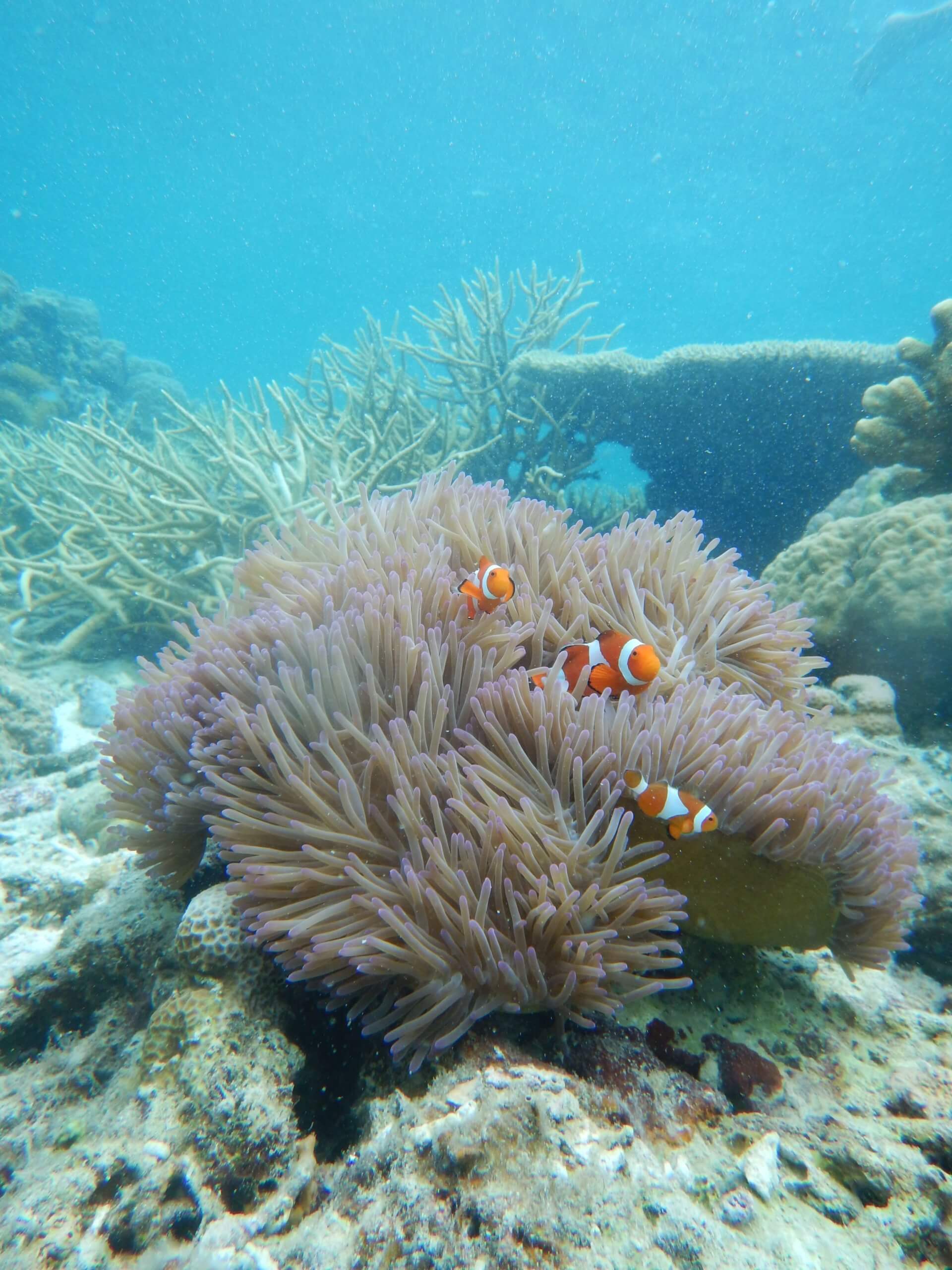
Pamilacan Island is a small island which is part of the municipality of Baclayon. It is between the deep sea of Bohol and Mindanao. It is only a 1-hour pump or outrigger boat ride from the town of Baclayon. It has three sitios, one at the southern coast, one situated inland and the other facing the town of Baclayon. Home to more or less 200 families, this fishing community is closely knit. Their main livelihood is fishing, and in the past has gone after whales, manta rays and dolphins. Their houses are often decorated with large whale jaws and bones and these ‘relics’ adds to the interesting facet of the island. In the local dialect, Pamilacan means “resting place of the mantas” though some local folks say that the name of the island was derived from the word “pamilac” or harpoon, a common fishing implement used to capture whale sharks, manta rays and dolphins. The island lies at the heart of the Bohol Sea. It is made of coral and fossilized seashells that one sees on the island’s rocky hill. It is surrounded by a “fringing reef” and some marine species are starfish, seagrasses, crinoids, crown of thorns and cleaner wrasses. The prized Gloria Maris seashells abound in its surrounding waters. Blessed with white sand beaches, the island is also a tourist destination because of magnificent dive sites nearby which gives the diver a breathtaking view of giant gorgonians, tunicates, sponges, anemones as well as other unique marine life. A very small coral island called “Dakit-Dakit” can also be visited. The island is part of the Bohol Marine Triangle (BMT) with a marine sanctuary on the northwest side. It is home to at least 13 species of cetaceans. The large whales most often spotted are the Bryde’s whales and the sperm whales. Bryde’s whales are massive yet plankton eaters that can grow up to 15 meters. The sperm whales, the largest predator, reach up to 18 meters. The later is the prime target of whalers the world over. Sometimes seen alone, these large whales are oftentimes observed to travel in groups of 20 or more. Because of their large size and reputation for fighting back, they are not hunted much locally. They are the most commonly sighted large whales in the Philippines. Smaller whales found near Pamilacan are the short-finned pilot whale, the melon-headed whale, and the pygmy killer whale. Dolphins commonly sighted are the Risso’s dolphin, the playful spinner dolphin, the bottlenose dolphin, the spotted dolphin and the Fraser’s dolphin. The dolphin’s play area is the part where the current is the strongest, at the southern coast of Pamilacan Island. They are playful mammals and are very social, often jumping out of the water in threes or more and doing somersaults. They travel in small and large groups, most often following the wake of passing boats. Aside from the beautiful white sand beaches, magnificent dive sites, dolphin and whale watching, and bountiful marine life, the island also boast of a 200-year-old Spanish fort. The fort is situated at the northeast side of the island. In the past, it served as a watch station for intruders such as pirates and other enemies of the Spanish colony. The fort is triangular in shape, made of rubble. Cut coral blocks line its portal and windows. Round buttresses support the three corners of the structure, and embedded trusses and a triangular pillar in the center indicate that the fort may have a second floor, probably made of wood. No specific date has been established on the fort’s construction yet there are indications that it was constructed during the 19th century for a large wooden cross with an 1800’s date carved on it stood near the fort. The cross is now housed under a modern chapel nearby. The fort is said to form a network with the towers or forts in the towns of Loay, Baclayon, Panglao, and the city of Tagbilaran. To cater to tourists, locals and foreigners alike, a resort has recently been developed in the island – the Pueblo de Pamilacan Island Resort. Cottages and a souvenir shop are available and the resort offers guided tours around the island, dolphin and whale watching expeditions, and tours of other beautiful sites of the Bohol province. For dolphin and whale watching expeditions, be sure to contact experienced Pamilacan fishermen as guides. They have the uncanny abilities of homing in on these great creatures which baffles even scientists. With them, all expeditions are rewarded with 100% sightings. Experienced and trained guides are a must so that proper procedures are followed to avoid unnecessary stress on the mammals. These mammals will continue to inhabit the waters if they are not much disturbed. Though whales and many of the dolphins are most active at night and during early morning, the best time to watch them is at dawn when you can clearly see them and appreciate their antics. Trips usually begin in March until the onset of the rainy season in June or July though tours depend much on weather and sea conditions. One can see though resident dolphins and whales the whole year round.

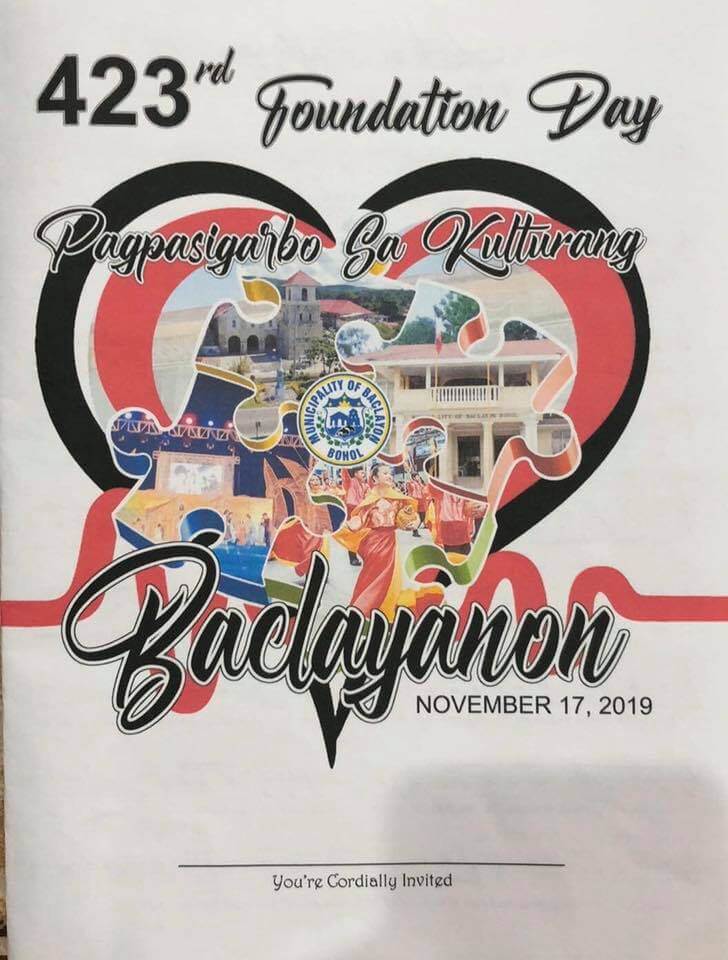
423rd Founding Anniversary

423rd Founding Anniversary

Baclayon has played a prominent and proud role in the history of Bohol as it was the first municipality to be established in the island by the Spaniards. Pre-Spanish Period Around the 12th Century A.D. a group from Northern Mindinao, the Dapitanes, established themselves in the strait between the islands of Bohol and Panglao. In 1563, the Dapitan kingdom was attacked by the Ternateans of the Mollucas. Not long afterwards, with the departure of the Dapitanes from the island, another settlement was formed six kilometers along from the old Dapitan kingdom. Since this new settlement was a good walking distance from the old kingdom, it became known as “Baklayon” or place which is a good walking distance from another place. Baklayon was ruled by Datu Sikatuna, the chieftain of Bohol and in 1565, Spanish explorer Capitan Miguel Lopez de Legaspi reached the shores of the island in search of trade routes. Although he and his fleet were originally met with hostility, Legaspi explained he was on a mission of peace, not to destroy, kill or plunder. Legaspi subsequently became friends with Sikatuna, performing a blood compact, or Sandugo (meaning “one blood”), on March 25, 1565, the initiation of which is considered the first treaty of friendship between the Spaniards and Filipinos. The blood compact as described by Legaspi; Spanish Period A few years after the blood compact, the Philippines was divided into “Encomienderos” as an effect of a Royal Decree passed by the King of Spain, and Bohol was granted to Diego de Frias in 1571. An “Encomienda”, referring to a piece of land granted to the Spanish soldiers in which they would be able to own and farm but the role of Ecomienderos, also included the responsibilities of Christianizing the natives and extracting tribute from them. Knowing the responsibilities of Encomienderos, missionaries were requested to be sent to Bohol. On November 17, 1596, two Jesuit priests, Fr. Juan de Torres and Fr. Gabriel Sanchez, left Cebu for Bohol, and on the same day set foot in Baclayon to start the religious conversion of the villagers. Through hard work, patience and perseverance, the duo succeeded in winning the native’s confidence and the formal and systematic evangelization and Christainization of the Boholanos was begun. It was not until the growth in the number of Baclayon catechumens was ascertained that the decision to construct a visita (or chapel) and residencia for the Jesuit doctrineros was agreed upon. The chapel resembled more like a hut, made from light, native materials such as wood and nipa. Baclayon, then being the residence of the Jesuit Superior General, was the center of the Bohol missions and the visita became the hub of Christian civilization in Bohol. Many people from neighboring districts and islands travelled to Baclayon to seek instruction and incorporation into the Roman Catholic faith. However, on October 26, 1600, Baclayon was raided by around 300 Maguindanao Moros in 50 war boats led by Datu Sali and Datu Sirongan. Fortunately, their coming was forewarned, and when the raiders arrived 3 to 4 hours later, the people were nowhere to be found. Only four elderly people who resisted against fleeing were killed before the raiders sailed away. In fear of more raids against the “Residencia” it was transferred to Loboc. Life in Baclayon went on as usual and the population grew. In 1717, the settlement was raised to the status of a parish and construction of a new and sturdier church began. Through forced labor, 200 natives worked on the church until its completion in 1727. The design of the completed church was akin to a fortress to protect the Jesuits and the community from persistent Moro raids. With a belfry which served  as a watchtower, a rampart around the exterior and tunnels underneath the church the Spanish missionaries earned the affectionate title of El Padre (The Father). Baclayon then became a thriving settlement with 1,600 taxpayers. Due to the very large area covered by Baclayon, which then inlcuded Tagbilaran, Alburquerque, Balilihan, Corella and Sikatuna, the priests and Spanish officials found it hard to impose a tax-census and control the activities of the inhabitants. Additionally, the 8,000 people who wished to go to confession and services could no longer be accommodated inside the church premises. Subsequently, division of land was needed with Tagbilaran being the first to separate from it’s mother town in 1742, followed by Balilihan (1828), Alburquerque (1868), Corella (1884) and finally Sikatuna (1917). American Period After a two year period of rebellion, Philippine Independence from Spanish rule was finally declared on the 12th June 1898. A month prior, American naval forces had joined the uprising and fought in a one-sided assault in what is now known as “The Battle for Manila Bay”. Unknown to the Filipino people however, the support of the American military was not based on good-will and was in fact part of their plan to acquire a colony in Asia, with the Philippines being in an ideal strategic location. Subsequently, the Filipino’s celebrations at their establishment as a republic was short lived when in December 1898 the Philippines was officially signed over to the Americans after 333 years of Spanish rule in the Treaty of Paris for merely US$20 million. Finally realizing the deception of the Americans, Filipinos again prepared for war. However, after a year of fighting, the provinces started falling to their invaders, and on March 17, 1900 American forces landed in Dauis and marched to Tagbilaran to claim the island. Outwardly, the Boholanos cooperated with their new masters. In secret however, the local leadership was planning for all-out insurrection, which broke into hostilities on September 1st, 1900, when all of the leading citizens in Tagbilaran and major towns took up arms and fled to the hills to carry on the struggle. The Americans fought back ferociously, burning entire towns and torturing those suspected of having sympathies with the insurgents in the mountains. It was this dire condition that was faced by the Municipal Mayor of Baclayon, Tan “Tiyoy” Oppus, scion continue reading : 423rd Founding Anniversary